
Wilhelm Wundt: The Father Of Experimental Psychology
Reviewed by
Dr Elena Talavera Escribano
Psychology has evolved from a branch of philosophy into a distinct scientific discipline over the past few centuries. Today, it is a field that intersects with many aspects of life, leading us down a path of understanding in relation to our behaviour, thoughts and emotions.
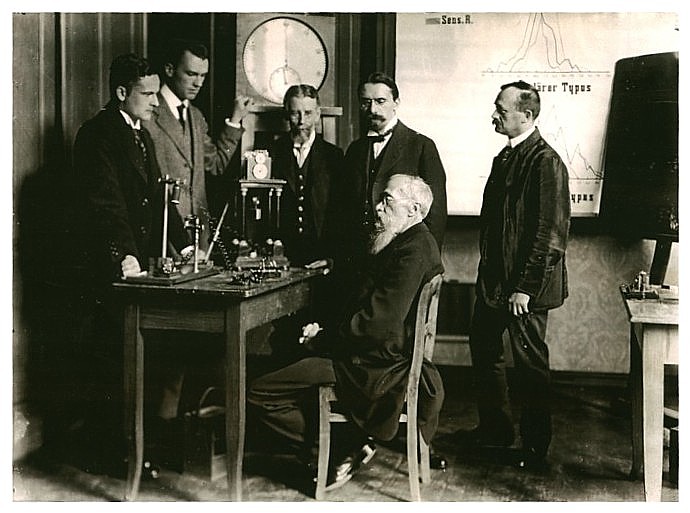
That scientific evolution would not have been possible without Wilhelm Wundt (1832-1920), also known as the “father of psychology” [1]. He was a German physiologist and psychologist and is now considered one of the key figures in the development of early modern psychology. Wundt actually established the first psychology laboratory in 1879.
Wundt was a renowned physiologist before becoming a psychologist, working in a laboratory at the University of Leipzig. While working with physical processes in the laboratory, Wundt became interested in mental experiences and believed this played a part in human perception. This curiosity led him to explore the mind in more depth, leading to what we know as psychology today.
Wundt published what is considered one of the first psychology textbooks, “Principles of Physiological Psychology” in 1873, when psychology was viewed as the scientific study of conscious experience, and he developed methods such as introspection to objectively measure these components [2].
A major turning point in the field occurred in 1879 when Wundt founded the first laboratory for psychological research at the University of Leipzig [3]. This helped to attract students from around the world to study in Leipzig and thus, experimental psychology as a scientific discipline was born. Wundt had separated psychology from philosophy, as the mind could now be measured in a more controlled and objective way.
After continuing on this path, Wundt later began to realise that there were more complex processes within the human mind that could not be measured in a laboratory. Wundt believed we needed to be culture-sensitive, and therefore integrated this into his conception of “dual psychology” [3]. He wrote “Völkerpsychologie” between 1900 and 1920 to showcase this development in research [4].
Structuralism is a theory of consciousness, founded by Wilhelm Wundt [5], that aims to analyse and break down mental processes into their basic components or structure. For example, this involves studying how specific thoughts and sensations combine together to create more complex experiences within the human mind.
The structuralist paradigm suggests that you can understand the mind by identifying its basic elements, comparable to how chemists study their substances by understanding the chemical components involved. Cognitive processes therefore develop by combining these simpler elements to create more complex forms. For example, language development may begin with an understanding of letters and sounds.
Structuralism was considered the first school of thought within psychology. The theory was then further developed by one of Wundt’s students, Edward B. Titchener [5]. However, the theory was later criticised because self-reports were considered unreliable and lacked applicability to real-world situations.
Nevertheless, structuralism laid the foundations of psychology and the scientific study of the mind, paving the way for the development of later theories. Even though structuralism is no longer a dominant school of thought, its contributions still play a significant part in the history of psychology.
As part of the structuralist theory, Wundt’s method of introspection, or “internal perception”, was his main method of study, where he aimed to measure mental responses objectively [6]. It was developed in the late 19th century and was a highly structured technique in which participants observed their own mental and emotional states in response to certain stimuli.
One of the most widely known studies of introspection are Wundt’s reaction time experiments [7]. In these studies, Wundt measured how long participants took to respond to a visual or auditory stimulus. Participants were then asked to observe their internal responses and describe the sensations and feelings they experienced in response to those stimuli.
Wundt considered this to be an objective measurement technique as participants were trained and given the same instructions to follow in a highly controlled laboratory setting. This meant that all factors were controlled for and reports given were only about the sensations and feelings experienced when specific external stimuli had been introduced. Additionally, he replicated observations several times to ensure consistency of the responses. Due to the consistency in conditions and instructions, Wundt’s methods could be seen as having high internal reliability.
Wundt’s introspection method would no longer be regarded as scientific according to modern standards. The method has since been criticised for its subjectivity due to self-reporting and cognitive biases [6]. For example, different participants may interpret the same mental experience in very different ways, determined by factors such as the individual’s current mood, past experiences and existing beliefs, making results highly subjective.
Furthermore, psychologists have suggested that by not acknowledging unconscious processes [8], which refer to the processes outside of what we are consciously aware of, the method misses a key part of the overall picture. Key figures such as Sigmund Freud emphasised the importance of the unconscious mind [9], suggesting that repressed memories and emotions also played a significant role in human behaviour. Thus, introspection as a lone method may only present a partial view of the mind.
Wilhelm Wundt still stands as one of the most influential figures in the history of psychology, having made several significant contributions that have given him the title as the “founder of experimental psychology”.
While Wundt’s methods are no longer dominant in modern psychology, the idea of introspection is still widely used in therapeutic settings. Thus, Wundt’s efforts continue to influence contemporary psychology and his legacy will remain for generations to come.